The Economic Battle for Liberty
When we look back at the dramatic events of 1776, our minds naturally drift toward major military battlefields and elite political assemblies. However, a silent and incredibly vital revolution was taking place simultaneously inside the small, smoky workshops of local colonial tradesmen. For decades, the British Empire had strictly forbidden the American colonies from manufacturing their own finished goods. Royal laws forced the colonists to rely entirely on British imports for everything from simple clothing buttons to heavy iron tools.
Consequently, when the war broke out and British trade routes were completely severed, the colonies faced an immediate economic crisis. America desperately needed a localized blueprint for survival. In this dark hour, it was the everyday tradesmen—the blacksmiths, shoemakers, weavers, and printers—who stepped up to become the economic backbone of the American Revolution.
Faith, Industry, and Divine Calling
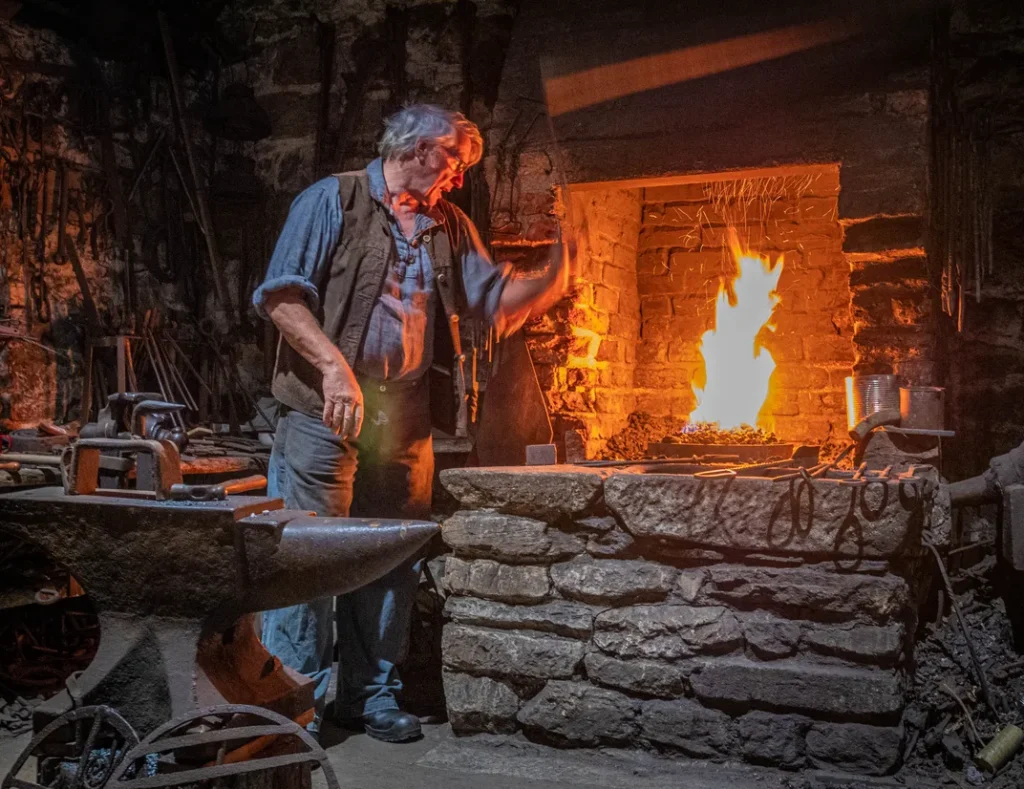
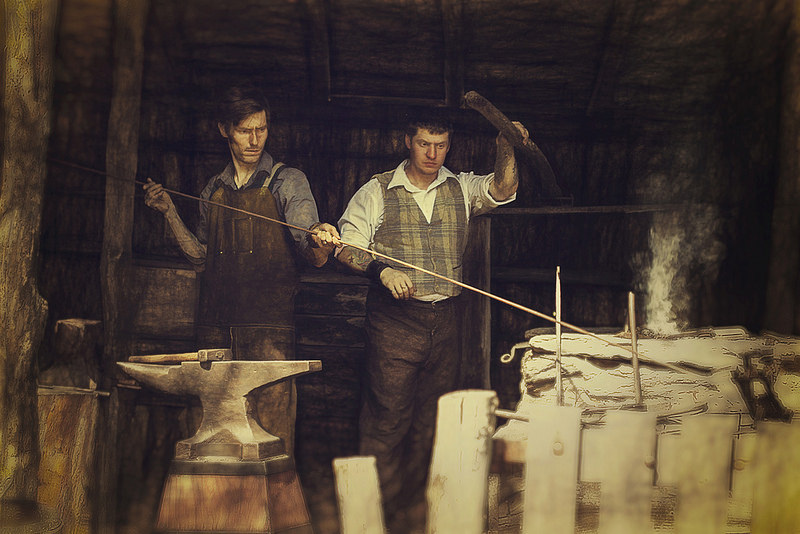
Furthermore, these early entrepreneurs did not view their daily labor through a purely secular lens. On the contrary, colonial labor was deeply intertwined with a profound reliance on the Creator. Blacksmiths, working long hours over blazing fires, viewed their exhausting trade as a divine calling to forge a new nation. They believed that God had blessed them with the physical strength and practical skills necessary to resist imperial tyranny.
Therefore, small-town workshops quickly transformed into vibrant hubs of local resistance. Blacksmiths melted down domestic scrap metal to forge vital horse bits, farming tools, and musket parts for the Continental Army. Meanwhile, local weavers worked around the clock to create simple, homespun uniforms for freezing soldiers. These tangible acts of industry were a direct reflection of active faith. They proved that a neighborhood can survive deep structural trials only when its citizens dedicate their daily work to a higher moral purpose.
The Power of Local Unity
Ultimately, this localized network of small businesses created an unbreakable buffer against imperial overreach. By refusing to rely on foreign powers, early American communities discovered the true meaning of self-reliance and mutual support. Neighbors pooled their scarce resources together, backed local merchants, and lifted one another up through intense economic hardships.
This historic model of localized, faith-driven industry is exactly what allowed a fragile union of thirteen divided colonies to stand strong against the greatest empire on earth. It reminds us that true freedom is never preserved by top-down government decrees. On the contrary, it is built from the ground up through the quiet, daily resilience of ordinary citizens working hand in hand.
Rebuilding Our Forges Today
As we approach the historic 250th anniversary of our nation, the forgotten stories of these colonial tradesmen offer a beautiful lesson for our modern towns. Today, our neighborhoods face deep economic shifts, isolation, and a loss of community identity. However, we can find a great blueprint for local renewal by looking back at our roots.
To see how other early leaders used their public platforms and unique talents to make a bold stand for independence, you can read about the inspiring history of Thomas Jefferson and the 1774 Resolution. By supporting local small businesses, honoring our families, and putting faith first, we can easily revitalize our modern towns.